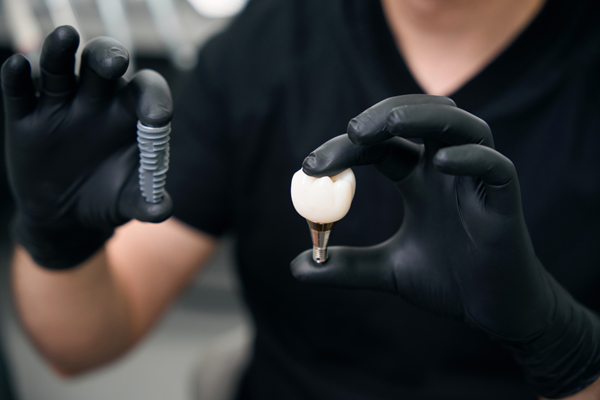
A dental implant is a dependable way to replace a missing tooth. While some implants may loosen or fail under certain conditions, most implants work well for many years when the gums and bone remain healthy. The key is to recognize the warning signs of trouble early and to support this smile restoration with excellent care.
How a dental implant stays in place
A dental implant is a metal post, often titanium, that a dentist places right into the jawbone to help replace one or more missing teeth. This metal post fuses with the bone, becoming an artificial tooth root and a strong foundation for a crown, bridge, or denture. As a result, the final smile restoration can support normal biting and chewing with impressive stability. Many patients describe the sensation as nearly identical to that of a natural tooth.
Can an implant actually fall out?
An implant-supported crown, bridge, or denture could fall out. The implant itself, however, is secured beneath the gums, so it is not likely to pop out of the mouth. Unfortunately, it can still loosen and break free from the jawbone. This condition is known as implant failure.
An implant can fail early due to improper healing, preventing it from fully fusing with the bone. Alternatively, it may fail years later due to peri-implantitis (gum disease around the implant). Overloading the implant, such as from teeth grinding or an uneven bite, is another leading cause of failure.
The good news is that implant failure is preventable. Choosing a dentist experienced in implant placement and maintenance can help patients avoid it. Practicing good oral hygiene also supports success with implants.
When there is an issue with the visible tooth replacement
Sometimes, the problem is not with the implant itself but with the crown, bridge, or denture. These visible components of an implant system can become damaged, shift, or detach without the underlying implant failing. A quick evaluation usually identifies the exact part that needs attention. The dentist can then quickly provide repairs or replacements, so the patient can return to their daily routine.
Signs that something could be wrong with an implant-supported restoration
Most patients notice small warning signs before a dental implant becomes seriously unstable. These include:
- Visible movement or a clicking sound during speech
- Sharp pain or a dull ache when chewing food
- Swelling, redness, or bleeding along the gumline
- A sudden change in how the teeth meet
- A persistent bad taste or odor near the site
Addressing these symptoms early helps prevent the problem from worsening and supports a functional, comfortable bite for years to come.
Daily habits that support implant stability
A few daily habits can help prevent problems with dental implants. For example, consistent oral hygiene makes a big difference in the longevity of an implant. Patients must brush and floss carefully to keep the gumline free of plaque. It is also important to avoid overloading the restoration, such as by biting nails, chewing on ice, or using the teeth to open packages. Finally, regular dental appointments allow a dentist to deep clean the whole smile and spot any implant-related issues as soon as possible.
Learn more about dental implants
A dental implant can support a stable tooth replacement when properly cared for. With strategic placement and regular checkups, a dentist can also help an implant last a lifetime. Contact Valley Neighborhood Dental Center for more information.
Request an appointment here: https://www.vndak.com or call Valley Neighborhood Dental Center at (907) 745-1966 for an appointment in our Palmer office.
Check out what others are saying about our dental services on Yelp: Dental Implants in Palmer, AK.
Related Posts
Dental implants are one of the most popular forms of tooth restoration due to the range of benefits they can offer. By learning more about why so many are choosing dental implants to replace one or more missing teeth, patients can determine if they are the best option for them. Every patient has a different experience…
Dental implants are one of the most effective and innovative methods of tooth replacement. Dental implants can experience their own problems such as failure, but it is quite unlikely. Thankfully, there are ways to prevent implant failure. Although dental implants rarely fail, it is possible. Being aware of how dental implants fail may help one…
Considering dental implants to replace missing teeth?No matter how it happens, having missing teeth can make anyone feel self-conscious. Instead of smiling naturally, people with missing teeth tend to hide their smiles and lose their confidence. Even worse, the space left by missing teeth is more likely to become infected with bacteria as opposed to other…
A dental bridge can replace missing teeth, restore chewing support, and help keep the smile balanced. This restoration uses crowns and artificial teeth to fill a gap and usually attaches to nearby natural teeth or dental implants for support. While timelines can vary, partnering with our dentist can help extend your bridge's lifespan.The lifespan of…